
Garage Door Opener Repair in Illinois
How garage door opener repair works in Illinois — motors, boards, sensors, drives, brands. Signs, repair vs replace. Call 123-456-7890.
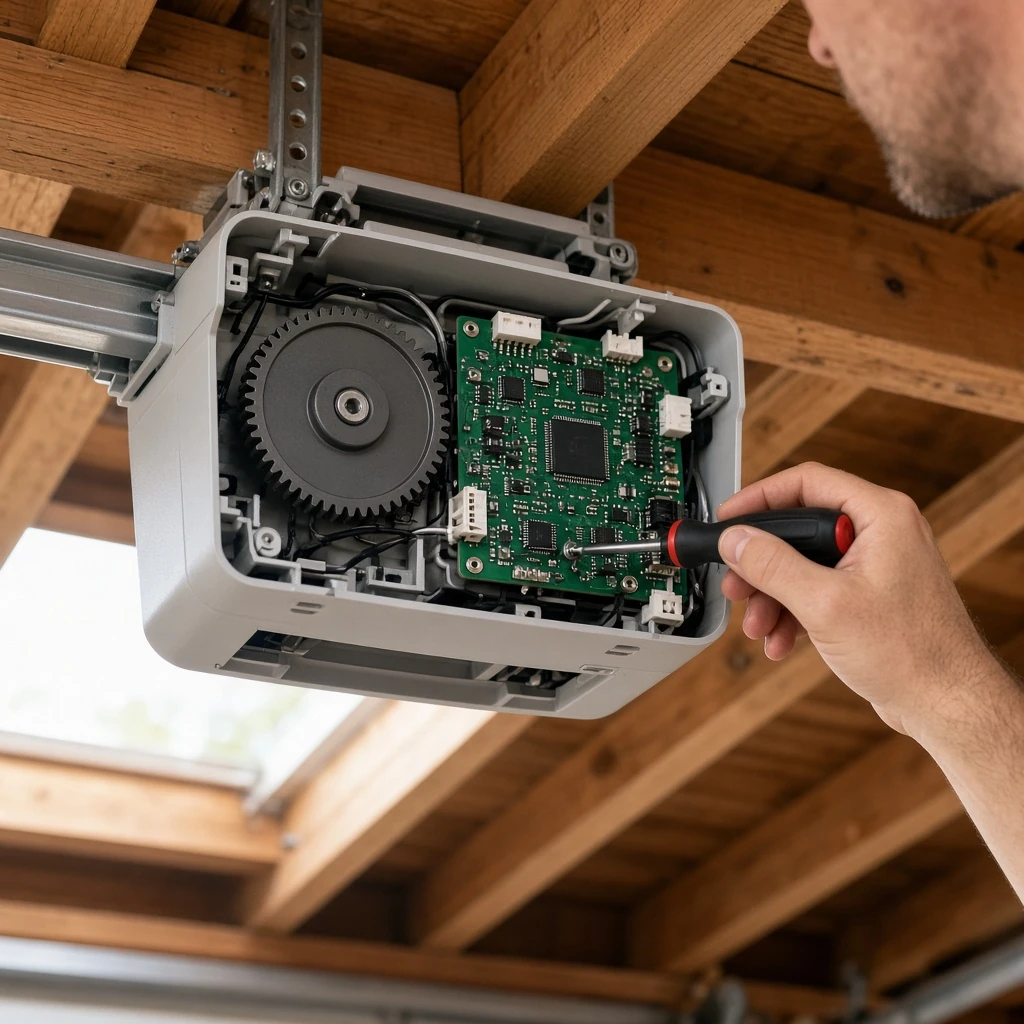
Garage door opener repair in Illinois rises every winter, because an opener strains hardest against a cold, stiff door. At Chicago's O'Hare station the January mean is 25.2°F under NOAA's 1991–2020 normals, and that cold thickens the grease on rollers and hinges so the motor works harder on every lift. Many suburban homes also run openers installed decades ago, well past their service life. This page explains the opener's parts, the common faults, how repair works, and when to replace instead; the city pages list the companies that do it. Call 123-456-7890 to reach a local garage door pro.
How a Garage Door Opener Works
An opener does not lift the door — the springs do that. The opener guides the balanced door up and down and holds it closed. It has four parts that fail: the motor and logic board that drive and control it, the drive mechanism (belt, chain, or screw) that moves the trolley, the safety photo-eyes near the floor that reverse the door if something crosses the beam, and the remotes, keypad, and wall button that send the signal. A fault in any one of these shows up as a door that won't move, moves wrong, or won't take a command.
Drive Types
Openers come in three drive types, and the type affects both the noise and the repair. Chain drive is the oldest and loudest, with a bike-style chain, and is common on older Illinois openers. Belt drive uses a rubber belt, runs much quieter, and suits an attached garage with rooms above or beside it. Screw drive turns a threaded rod and needs its track kept greased, which matters in the cold where the grease stiffens. A technician matches a replacement drive to the garage, since a belt drive is worth the extra cost under a bedroom.
Common Opener Faults
- Door reverses before closing — almost always a misaligned or blocked photo-eye sensor, the single most common opener fault.
- Motor hums but door won't move — often a failed capacitor or a stripped drive gear.
- Opener runs but door barely moves — usually a door problem feeding back: a weak or broken spring, not the opener itself.
- Remote or keypad won't work — a dead battery, a reprogram needed, or a failing logic board or antenna.
- Door won't respond at all — power, a tripped outlet, a locked wall button, or a dead board.
Signs Your Opener Needs Service
Watch for a door that reverses for no reason, responds slowly or intermittently, is noisier or rougher than it used to be, works from the wall button but not the remote (or the reverse), or an opener that is more than 10 to 15 years old. An opener made before the 1993 federal photo-eye mandate has no auto-reverse safety sensors and should be replaced regardless of whether it still runs, because it cannot stop on a car or a child.
How Opener Repair Works
First, the technician checks the safety photo-eyes, since a misaligned sensor is the most common reason a door reverses. Second, the motor, capacitor, and logic board are tested to separate an electrical fault from a mechanical one. Third, the drive — belt, chain, or screw — is adjusted or replaced and the travel and force limits are reset. Finally, the door's balance is checked, since a weak spring overworks the opener, and the auto-reverse is tested against an obstruction before the job is done.
Why Illinois Openers Fail
Illinois openers fail from age and cold together. An opener lasts 10 to 15 years, so units in the many suburban homes built in the 1970s and 1980s are overdue. The cold then pushes them: a stiff, cold door and a frozen bottom seal make the opener pull harder, and a weak spring forces it to carry weight it was never built for. Under that load the opener trips its force limit, strips the drive gear, or burns out the motor. This is why an opener failure is so often really a spring or balance problem — and why a technician checks the door before condemning the motor.
Repair or Replace the Opener
Repair makes sense for a sound opener with one failed part — a capacitor, a gear, a sensor, or a board on a unit under about 10 years old. Replacement makes sense for an opener past 10 to 15 years, one that has failed more than once, or any unit made before the 1993 photo-eye mandate. A replacement is also the moment to move from a loud chain drive to a quiet belt drive under a bedroom, or to add Wi-Fi and battery backup — useful in Illinois, where a winter storm outage can otherwise leave a door stuck. A technician weighs the repair cost against a new unit; see the cost guide for ranges.
What to Look for in an Opener Repair Company
An opener repair company worth calling diagnoses whether the fault is the opener or a door problem feeding into it, rather than replacing the unit by default. It tests and realigns the safety sensors, resets the force and travel limits, checks the door's balance, and carries liability insurance with proof on request. A good company flags a pre-1993 opener that should be replaced for the safety sensors, and matches a replacement drive type to the garage. Call 123-456-7890 to reach an opener repair pro in Illinois.
Frequently Asked Questions
A door that reverses before closing almost always has a misaligned or blocked photo-eye safety sensor. The two eyes near the floor must line up, and dirt, a bumped bracket, or a cold-shifted track throws them off. Wrong force or travel limits can also cause it. A technician realigns the sensors, clears the path, and resets the limits. If the door is also heavy from a weak spring, that gets corrected too, since the opener will keep reversing against a door it cannot move easily.
Repair fits a sound opener under about 10 years with one failed part — a capacitor, a gear, or a misaligned sensor. Replacement fits an opener past 10 to 15 years, one that has failed repeatedly, or one made before the 1993 photo-eye mandate, since those lack the auto-reverse sensors required today. Many Illinois homes still run openers from the 1990s or earlier. A technician tests the motor and board to tell you which path the unit needs.
An opener struggles in winter because the door is harder to move. Cold thickens the grease on rollers and hinges, a frozen bottom seal bonds the door to the slab, and cold steel springs lose some lift. At the O'Hare station the January mean is 25.2°F under NOAA's 1991–2020 normals. The opener senses the extra resistance and either reverses or strains, which is why opener calls rise with the first hard freeze. Often the real fix is freeing the seal and checking the springs, not the opener.
It should not, and forcing it causes damage. The spring carries the door's weight; the opener only guides it. With a broken spring the opener pulls the full weight of the door, which burns out the motor or strips the drive gear. Leave the door down and have a technician replace the spring as a matched pair before using the opener again. An opener failure right after a loud bang in the garage is usually a broken spring, not the opener.
A garage door opener typically lasts 10 to 15 years. Illinois winters shorten that because the motor strains against stiff, cold doors and frozen seals, and a weak spring adds load. An opener from before the 1993 photo-eye mandate should be replaced for the auto-reverse safety sensors regardless of whether it still runs. A technician can test whether your unit needs a repair or a full replacement, and recommend a quieter belt drive if the current one is a loud chain.
For an attached garage with a bedroom or living space above or beside it, a belt drive is usually worth the extra cost because it runs much quieter than a chain drive. The quiet matters most in the many Illinois homes where the garage is built into the house. A belt also needs less maintenance than a screw drive, whose track grease stiffens in the cold. For a detached garage, a chain drive is fine and cheaper. A technician can match the drive to the garage.
A battery backup is worth considering in Illinois because winter storms cause power outages, and without backup an electric opener leaves the door stuck — you either lift a heavy door by hand on the emergency release or cannot get the car out. A backup keeps the opener running through an outage for a limited number of cycles. It is a common add-on when replacing an opener. A technician can include one in a new unit.
Call Now for Garage Door Opener Repair in Illinois
To reach a garage door opener repair company serving your Illinois town, call 123-456-7890.
Call now to reach a garage door pro in Illinois.
One call reaches a local company for repair, spring replacement, opener service, installation, and replacement. No forms — just a phone number.